KnitSilk Banana Plant Fibre – Loose Natural Craft Fibre | 500 g | Plant-Based
KnitSilk Banana Plant Fibre – Loose Natural Craft Fibre | 500 g | Plant-Based
🌿 Bring Real Plant Texture to Your Creative Work
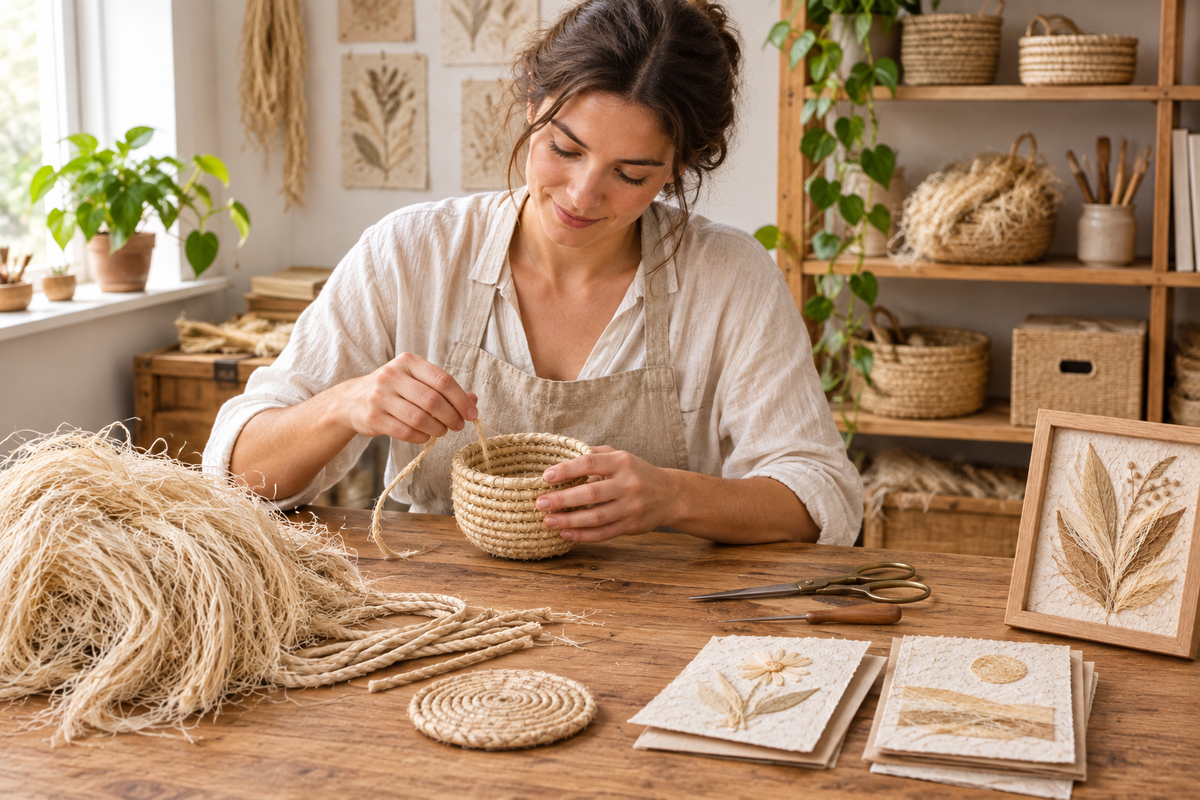
KnitSilk Banana Plant Fibre offers 500 grams of real banana plant fibres for makers who enjoy exploring materials in their loose fibre form. The supplied photographs show pale cream-to-straw tones and separated, irregular strands with an expressive natural texture.
Hold a small bundle, gently separate the strands and explore their character before choosing your technique. This is a material for experimenting, preparing and transforming, rather than a ready-to-knit yarn. From a textured art piece to a small fibre-blending trial, start with a sample and let the material guide the design.
✨ Key Characteristics
- 🌱 Real banana plant fibres
- ⚖️ 500 g item weight for sampling and creative projects
- 🧵 Loose fibre form rather than finished yarn
- 🎨 Pale cream-to-straw appearance in the supplied photographs
- 👐 Separated strands with a visibly irregular, natural texture
📋 Product Specifications
- Brand: KnitSilk
- Material: Banana plant fibre
- Product type: Loose plant fibres
- Item weight: 500 grams
- Appearance: Pale cream-to-straw tones, as photographed
- Yarn weight and yardage: Not applicable, this is not spun yarn
- Needle and hook sizes: Determined by any yarn you produce, not by the loose fibre
🎨 Creative Uses & Project Ideas
- Spinning experiments: Prepare a small sample and test whether your tools and technique suit the fibre before planning a full batch.
- Fibre blending: Explore small blends with other fibres and compare handling, cohesion and surface texture.
- Textile art: Attach loose strands to a support to create organic layers and dimensional surfaces.
- Papermaking trials: Experiment with small additions to a prepared pulp, using appropriate fibre-processing methods.
- Decorative work: Explore wrapped forms, fibre collages and rustic display details.
- Material studies: Keep labelled samples to document the effects of preparation and handling.
🌱 Sustainability Story
Banana fibre is plant-derived, offering an alternative material to explore alongside animal-derived and synthetic fibres. The plant origin alone does not establish a product-specific environmental certification, organic status or carbon-neutral claim. Plan small trials first and reuse suitable leftover strands in art or sampling projects to reduce avoidable waste.
🔍 How Banana Plant Fibre Compares
- Compared with banana yarn: These are loose fibres that need preparation or incorporation into a project, not a ready-spun strand for knitting or crochet.
- Compared with wool: Banana fibre is plant-derived rather than animal-derived; do not assume it will handle or felt like wool.
- Compared with cotton fibre: Treat it as a separate material and test its preparation rather than carrying over cotton settings unchanged.
- Compared with synthetic craft fibres: This material comes from a plant and has visibly irregular strands rather than a uniform manufactured appearance.
🫧 Care & Handling
- 📦 Store in a dry place away from moisture.
- 👐 Separate strands gently and work with small samples first.
- 🎨 Test cleaning, dyeing and finishing on a small section before treating the full quantity.
- 🌬️ If preparation generates loose dust, work in a well-ventilated space and avoid inhaling it.
- 🧵 Choose care methods for the finished piece according to its complete material composition.
👋 Who Is This For?
- Handspinners exploring plant-fibre preparation
- Textile artists creating organic surface textures
- Papermakers conducting fibre trials
- Craft makers working with loose natural materials
- Students and designers building material sample libraries
💬 Quick Product Answers
Is this yarn?
No. This listing is for loose banana plant fibres, not ready-spun yarn.
How much fibre is included?
The item weight is 500 grams.
Can I knit or crochet directly with it?
Not as a conventional yarn. Prepare or spin the fibre first, or incorporate it using another textile technique.
💫 Why Choose KnitSilk?
KnitSilk brings tactile materials to makers who value experimentation and creative detail. This 500 g banana plant fibre listing clearly identifies the material as loose fibre so you can choose your preparation method and project with confidence. Global shipping is available.
🌿 Separate the strands. Explore the texture. Make something distinctly yours. ✨
🧰 Tools & Supplies You May Need
Choose tools for your project; these are recommendations, not a statement that accessories are included.
- For craft work: small sharp scissors, a clean work surface, tweezers, a fabric backing, and a sewing needle and thread or compatible craft adhesive. Test adhesive on a small piece first.
- For spinning trials: a drop spindle or spinning wheel and blending or fibre-preparation tools suited to the supplied material. Work with a small sample first.
- For felting embellishment: a suitable felting wool base, felting needles and protective mat, or wet-felting supplies. Silk and plant fibres do not wet-felt on their own like wool.
🫙 Care & Glass-Bottle Storage
- Keep unused material in a clean, completely dry, wide-mouth glass bottle or jar with a well-fitting lid. Leave space so the contents can be removed without crushing or snagging.
- Store in a cool, dry cupboard, away from sunlight, heat and steam. Clear glass does not protect colours from sunlight.
- Never seal damp fibres or cocoons inside glass. Allow both the container and contents to dry completely before closing; trapped moisture can encourage mould.
- Handle gently with clean, dry hands. Test cleaning and colour transfer on a small sample first. Avoid bleach, wringing and vigorous rubbing of silk. Dry fully in shade after wet preparation.
- Keep colours separately labelled, inspect periodically for moisture or pests, and choose finished-project care for all the materials used.
💡 First-Time Buyer Mistakes to Avoid
- Assuming fibre and yarn are interchangeable: check the supplied form. Conventional knitting and crochet need a usable continuous strand; loose material requires preparation, spinning or secure attachment to a backing.
- Pulling or processing too much at once: start with a small sample, handle gently and test your preparation and finishing before using the full pack.
- Expecting silk or plant fibre to felt like wool: secure it to a backing or incorporate it with a suitable felting wool base.
- Skipping colour tests: test a small damp sample before combining coloured material with pale fabrics.
- Sealing damp material in a glass bottle: always dry thoroughly first.
| Specification | |
|---|---|
| Package Weight | 500 g |
 Beige

 weaving, Floral arrangements, Clothing embellishments, Costume making, Party decorations, Home decor och Gift wrapping