

KnitSilk Recycled Sari Silk Yarn – Pink | 100g Ball | 50-70 Yards
KnitSilk Recycled Sari Silk Yarn – Pink | 100g Ball | 50-70 Yards
RECLAIMED SILK · VIVID COLOUR · HANDMADE CHARACTER
🧶 Pink with Personality in Every Strand
Bring a vivid splash of pink and artisan-spun texture to your next creation. KnitSilk Recycled Sari Silk Yarn is crafted from upcycled sari silk remnants, with a rich, slightly thick-and-thin consistency for knitting, crochet, weaving and fibre art.
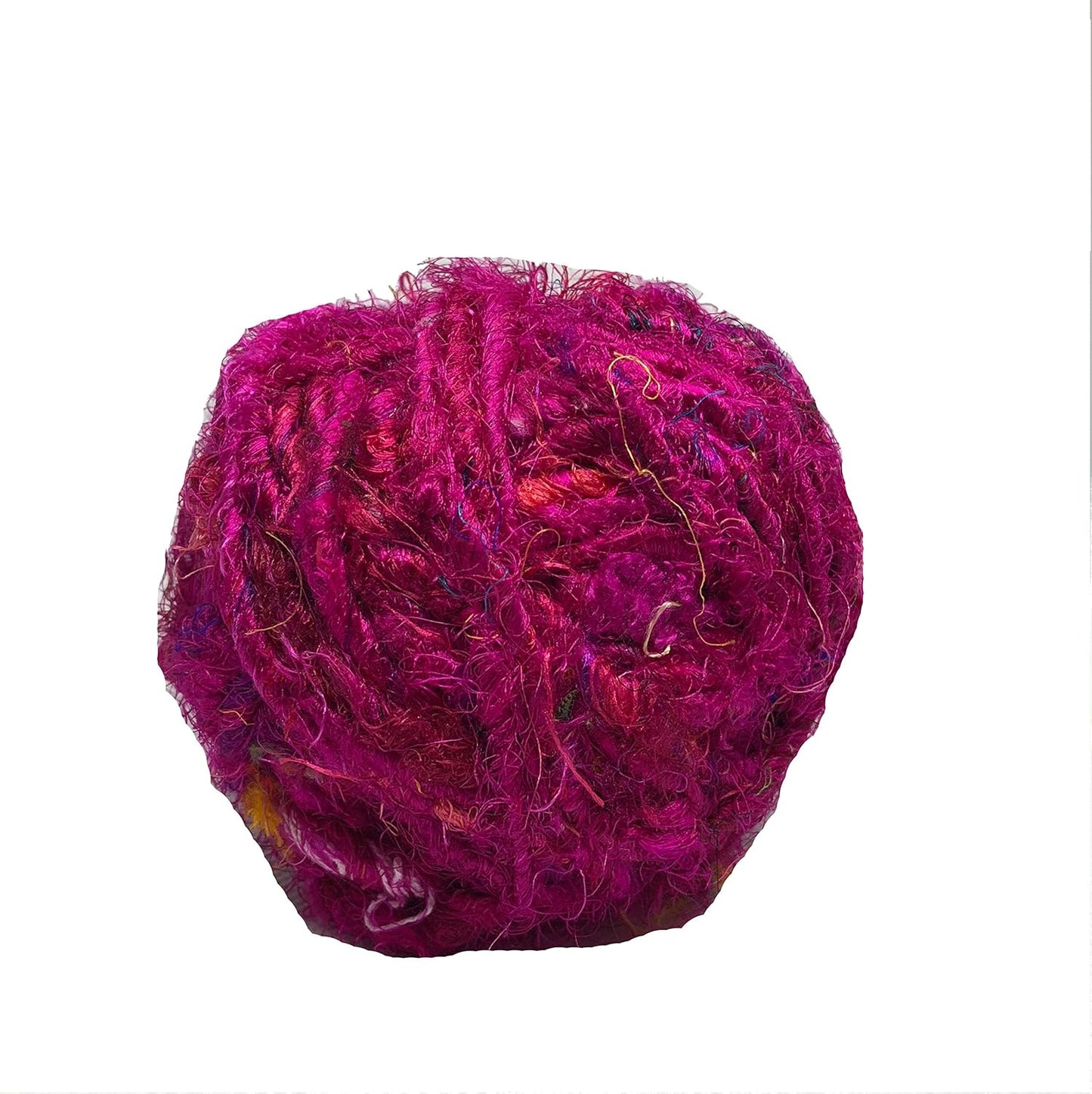
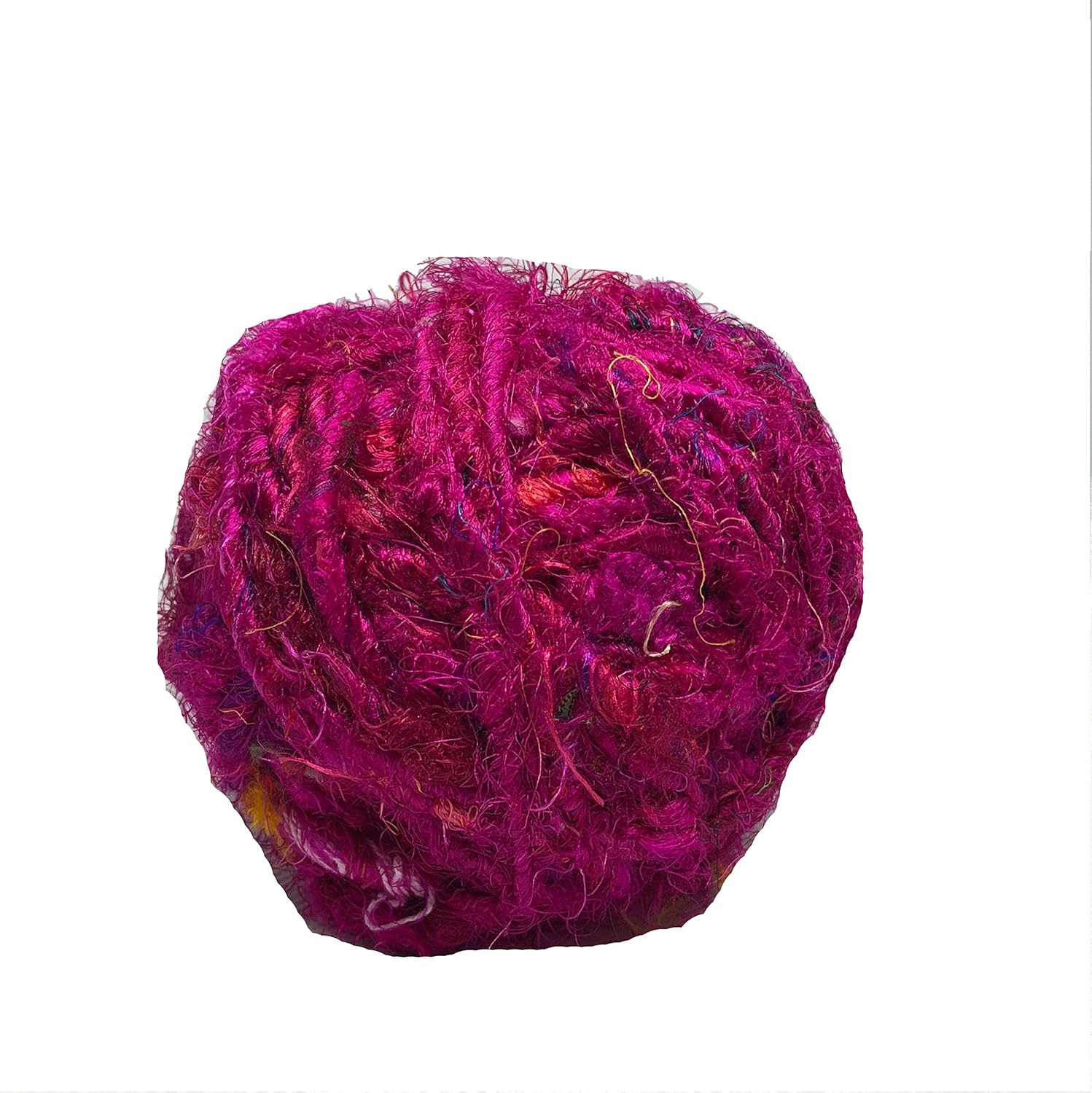
Hold the ball and explore its fuzzy, irregular surface, deep fuchsia-pink colour and scattered contrasting fibres. Imagine a bright woven accent against pale linen or a little tassel that gives a handmade accessory its finishing touch. Start with a sample and let the strand guide your design.
Pink • Approximately 100 g ball • 50–70 yards (46–64 m) • Hand-spun recycled sari silk
Starting tools: approximately 9 mm knitting needles and 8 mm crochet hook. Swatch and adjust.
🧶 Key Characteristics
- 💗 Vivid pink colour with the lively character visible in the product photographs.
- ♻️ Crafted from upcycled sari silk remnants.
- 👐 Hand spun by artisans for an individual strand texture.
- 🧵 Slightly thick-and-thin consistency rather than a uniformly smooth yarn.
- 🎨 Explore knitting, crochet, weaving and mixed-media work.
📏 Product Specifications
| Material | Recycled sari silk from upcycled sari silk remnants |
| Colour | Pink |
| Construction | Artisan hand spun |
| Texture | Slightly thick and thin, with an irregular surface |
| Net weight | Approximately 100 g per ball, excluding packaging |
| Length | Approximately 50–70 yards (46–64 metres) |
| Yarn category | Super Bulky / Category 6, approximate yardage-based estimate; not gauge-verified |
| Needles | Approximately 9 mm, untested starting estimate |
| Hook | Approximately 8 mm, untested starting estimate |
📐 Understanding yarn category and tools
50–70 yards per 100 g is approximately 46–64 metres per 100 g. Yardage alone cannot establish a standard category because silk density and hand-spun construction affect thickness. Category 6 is an approximate planning label, not measured gauge. Try 9 mm needles or an 8 mm hook as starting points, then adjust after sampling.
🎨 Creative Uses & Project Ideas
Tap to explore. These are inspiration ideas, not tested patterns or guaranteed one-ball projects. Finished items and additional materials are not included.
🖼️ A vivid woven accent
Use Pink as a textured weft against a suitable neutral warp. Begin with a small panel, handle the irregular strand gently and measure sample consumption before scaling up.
🧣 Knitted accessory details
Try simple stitches to showcase the yarn's surface. Wash a swatch before selecting a pattern. A complete scarf may require multiple balls; calculate from measured gauge and pattern requirements.
🪝 Crochet texture sampler
Explore a small sample before committing to an accessory. Work gently through the irregular sections and choose a hook that passes comfortably without snagging.
💍 Tassels and wrapped jewellery
Wrap short lengths around a smooth craft base or combine them with suitable findings. Secure ends, test adhesives on an offcut and check colour transfer before prolonged skin contact.
🧵 Mixed-media textile art
Couch strands onto fabric to create abstract outlines, lively colour accents and layered texture. Test your attachment method first and save small lengths for embellishment.
🌱 Sustainability Story
Upcycled sari silk remnants find another creative use in this yarn. Plan thoughtfully and save shorter lengths for samples and embellishments. No independent environmental certification, measured carbon footprint or specific cruelty-free claim is established for this listing.
🔍 How This Yarn Compares
- Versus smooth silk: choose this yarn for irregular hand-spun texture rather than uniform stitch definition.
- Versus wool: silk behaves differently; test elasticity and drape before substituting into a wool pattern.
- Versus cotton: its surface and construction produce a different effect. Swatch before substitution.
- Versus sari silk ribbon: this is hand-spun yarn, not a flat ribbon. Match strand format to your technique.
🫧 Care Instructions
- 💧 Hand wash cold with a silk-suitable cleanser.
- 🌀 Gentle machine wash is also a care option. Test a sample first and protect the piece in a mesh bag.
- 🤲 Avoid rubbing and wringing.
- 🌬️ Dry flat in shade; avoid bleach, tumble drying and direct high heat.
- 🧶 Check a washed sample for changes before treating a complete piece.
- 🧺 Store dry and away from snagging surfaces.
👋 Who Is This For?
- Knitters exploring textured yarn.
- Crocheters experimenting through small samples.
- Weavers seeking vivid colour accents.
- Jewellery and mixed-media makers.
- Makers interested in giving sari silk remnants another creative life.
❓ What can one ball make?
Small samples, jewellery details and embellishments are useful starting points. Approximately 50–70 yards are supplied per 100 g ball. Yield depends on technique, tension and dimensions; no specific project yield is tested here.
❓ Are the category and tool sizes exact?
No. Category 6 is an approximate yardage-based estimate. The 9 mm needle and 8 mm hook suggestions are untested starting points. Confirm gauge and drape with a sample before choosing a pattern.
✨ Why Choose KnitSilk?
Explore distinctive craft materials with clear specifications and practical creative ideas. Pink Recycled Sari Silk Yarn brings upcycled remnants and artisan-spun texture to your next experiment. Global shipping from India; delivery options depend on destination.
💗 Reimagined silk, ready for your handmade touch. 🧶
| Specification | |
|---|---|
| Item Length | 50 yard |
| Item Weight | 100 g |
| Package Dimensions | 10,5 cm x 7,5 cm x 7 cm |
| Package Weight | 150 g |
 Pink
 Silk
 Chunky


 Hand wash cold og Gentle machine wash

 9mm
 8mm


 Clothing, Home decor og DIY craft project